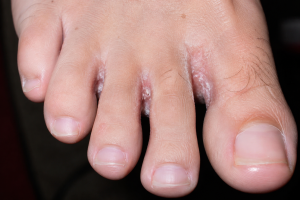

Most people don’t think much about their feet until something changes. Maybe you’ve noticed itching between your toes, flaky skin that won’t go away, or redness that seems to be spreading. At first, it’s easy to assume it’s just dry skin, but sometimes those symptoms point to a fungal infection.
If you’ve started searching for foot fungus treatment, you’re not alone. Foot fungal infections are common, and the good news is that many cases can be managed successfully with the right treatment and consistent foot care. Knowing what you’re dealing with, and taking action early, can help you get back to healthy, comfortable feet.
Foot fungus is a general term used to describe fungal infections that affect the skin on the feet. One of the most common types is athlete’s foot, which often develops between the toes but can spread to other areas of the foot if left untreated. Fungi grow best in warm, damp environments, which is why locker rooms, pool decks, and communal showers are often associated with the spread of these infections. According to MedlinePlus, athlete’s foot is a common fungal infection that can often be treated with over-the-counter antifungal medications, although more severe or persistent infections may require medical evaluation.
Not every fungal infection looks the same, but some of the most common symptoms include:
If symptoms continue to worsen, spread, or don’t improve with treatment, it’s important to contact a healthcare provider.
The best foot fungus treatment depends on the type and severity of the infection. Many mild cases respond well to over-the-counter antifungal creams, sprays, or powders when used according to the product directions. In some situations, a healthcare provider may recommend prescription medication if symptoms are severe or don’t improve. Regardless of the treatment you use, consistency is important. Stopping treatment too early may allow the infection to return.
Treatment is only one part of the process. Good daily habits can also help keep your feet healthy. Some simple practices include:
These habits support overall foot health and help create an environment that’s less favorable for excess moisture.
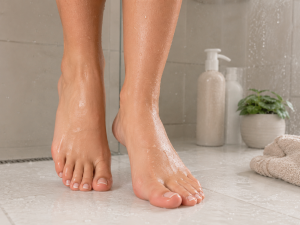
If you regularly shower at the gym, a campground, a hotel, or in a college dorm, it’s worth paying a little extra attention to your foot care routine. Many people remember to pack shampoo and a towel but don’t think about what they’re standing on. That’s one reason people add Shower Socks to their gym bag or travel kit. They’re lightweight, disposable, and designed to provide foot coverage in shared shower environments.
It’s important to understand that Shower Socks are not a treatment for foot fungus and are not intended to prevent fungal infections. They’re simply one part of a broader hygiene routine for people who use communal showers.
Taking care of your feet doesn’t have to be complicated. Recognizing symptoms early, following the directions on antifungal treatments, and maintaining good hygiene habits can all help support healthy feet. If you spend time in shared shower environments, packing Shower Socks alongside your other shower essentials is an easy way to stay prepared while traveling, working out, or living in a dorm.
At ShowerSock.com, we’re committed to helping people feel more comfortable using shared showers by providing a simple, convenient product that fits easily into everyday routines.
Many mild fungal infections can be treated with over-the-counter antifungal creams, sprays, or powders. More severe or persistent infections should be evaluated by a healthcare provider.
Treatment time varies depending on the type and severity of the infection. Follow the directions on your medication and complete the full course of treatment, even if symptoms improve.
Some mild cases may improve, but fungal infections often require treatment. If symptoms persist or worsen, seek medical advice.
Keeping your feet clean and dry, changing socks regularly, allowing shoes to dry between uses, and practicing good hygiene in shared shower environments are all important habits.
No. Shower Socks are not a medical device and are not intended to treat or prevent foot fungus. They are designed to provide disposable foot coverage while using shared showers as part of a good foot hygiene routine.